
October 20, 2026 Posted by AHW Endowment

Communication gaps between healthcare professionals and patients are common. Many of us leave a doctor's appointment and realize we missed much of what was said. We may feel too rushed to ask questions or forget care instructions by the time we reach the parking lot. Research suggests patients forget 40% to 80% of the medical information they're given, and in total, 36% of U.S. adults have only basic or below-basic health literacy skills, which can negatively impact health outcomes.
With funding support from Advancing a Healthier Wisconsin Endowment, organizations throughout the state are working to make health information easier to find, understand, and use. Their projects work at three levels: with individuals and communities, with health care providers, and within the systems that shape how health information is shared, taught, and measured.
Developing a Novel Intervention to Improve Health Literacy
An AHW-funded project implemented by United Community Center sought to improve diabetes knowledge and screening behaviors among Latinos in Wisconsin, given the significantly higher rate of low health literacy among minority populations. (1 in 5 Hispanic Americans in Wisconsin live with diabetes.) The project, Developing a Novel Intervention to Improve Health Literacy, culminated in a telenovela (a drama or soap opera-style show) that was entertaining and showcased key diabetes knowledge.
For this project, partners listened to community members and gathered their perspectives to identify culturally appropriate, medically accurate diabetes-related health messages. The result was an educational tool in the form of a telenovela that used narrative storytelling (a combination of education and entertainment) to make diabetes information engaging and accessible. The telenovela was later released on DVD and shared with diabetes educators for use with Spanish-speaking clients.
Empowering Families: Improving Health Literacy for Effective Asthma Management in Young Patients
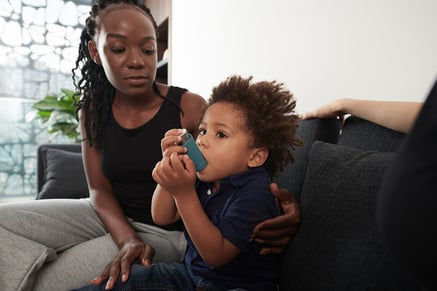 Asthma affects children in some Milwaukee and Madison neighborhoods more than in the rest of the state. Empowering Families: Improving Health Literacy for Effective Asthma Management in Young Patients, a project led by Lighthouse School, aims to improve childhood asthma management through culturally tailored digital education and community partnerships.
The team is creating animated asthma education videos that explain medical ideas in plain language. A community advisory board meets every other month to help shape the stories and language, so they reflect real challenges families face, such as allergen exposure or limited access to quality healthcare. The project will also share a toolkit with asthma action plan templates, visual inhaler instructions, and resource maps. Materials will also be shared in schools, clinics, and community centers, and the videos will be available online, including on YouTube.
Transforming Patient Interactions: A Performance Improvement Approach to Health Literacy
The Wisconsin Medical Society and Wisconsin Health Literacy’s project, Transforming Patient Interactions: A Performance Improvement Approach to Health Literacy, focused on the gap between what providers say and what patients understand. The team designed the “Caring Through Clarity” educational series, which covered communication foundations, best practices to improve patient health literacy, and the use of Teach-Back in clinical practice. Providers agreed to try the program, and their experience will help other clinics follow.
What Healthcare Providers Can Do
As the Wisconsin Medical Society and Wisconsin Health Literacy teams learned, clear communication is a skill, and new skills take time and effort to fine-tune. Providers can start by checking what patients already understand before they explain anything new.
Focusing on two or three key points and stating them first keeps the most important messages from getting lost. Providers can also invite questions by asking open-ended questions that can't be answered with a simple yes or no, which opens a dialogue. To ensure the message comes across, providers can use the "show me" method, where patients demonstrate a task, such as using an inhaler. Finally, written instructions and jargon-free, plain-language materials that fit a patient's language and culture give people something to review and refer to once they're home.
Consequences of Low Health Literacy
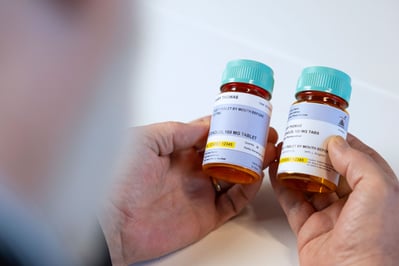 Understanding and applying health information also matters at the pharmacy counter. A serious consequence of basic or below-basic health literacy is the risk of misreading prescription labels and taking medications incorrectly.
Misreading and, thereby, misunderstanding can lead to further health problems, adverse reactions, hospital readmissions, and even death. (For example, a Wisconsin Health Literacy poll of more than 800 state residents found that one in four said they had taken a medication wrong because of confusing directions.)
Three AHW-funded projects, Adopting Patient-Centered Prescription Labels, Expanding Use of Patient-Centered Prescription Labels, and Reducing Medication Errors, all led by Wisconsin Health Literacy with Kenneth Schellhase, MD, MPH, formerly of the Medical College of Wisconsin, have worked to change that. Years of work with focus groups and pharmacies to redesign labels using evidence-based standards have improved patient understanding and medication use, resulting in fewer errors.
The Future of Health Literacy in Wisconsin
Health literacy won’t improve with a single change, coalition, implementation, or lesson learned, but with ongoing strategic planning and partnerships. It takes clear, relatable materials, healthcare providers who communicate with care, and systems willing to support progress.
Advancing a Healthier Wisconsin is proud to support this work as part of our vision of making Wisconsin the healthiest state in the nation. To learn more about these and other projects we fund, visit our funded projects page.